
-60°C Liquid Cooling Quick Freezer
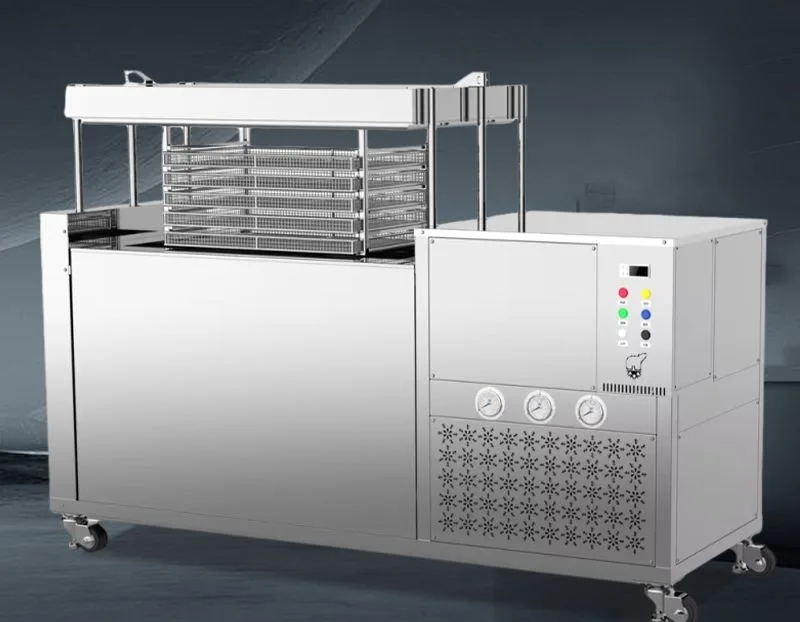
Commercial rapid refrigeration equipment using liquids as heat transfer media, For fast freezing and cooling of seafood, steak, meat and poultry.
Difference between liquid cooling and air cooling
The essence of freezing is to take the heat away from the ingredients. At the same temperature, the heat transfer speed of the liquid is much higher than that of air - this is a fundamental difference between the heat transfer properties of the liquid and the gas. Liquid-cooled quick freezing allows ingredients to exchange heat with cryogenic liquid media, rather than relying on cryogenic air to purge, resulting in a faster cooling process in the same temperature zone.
For seafood, steak, meat and poultry, which are sensitive to cell structure, the cooling rate directly affects the loss of juice and taste after thawing.
Manufacturer's material label: fish, meat, sea cucumber, cordyceps, matsutake, blueberries and other ingredients can be frozen through for about 20 minutes. The actual time is related to the shape of the ingredients, the initial temperature, and the single batch loading. It is recommended to try to freeze the ingredients according to the actual material arrangement before purchasing.
equipment characteristics
- On-sale model B200, temperature zone -45 ~ -60 ℃ (manufacturer's material label)
- Liquid-cooled heat exchange mode, different from conventional air-cooled quick-freezing cabinets
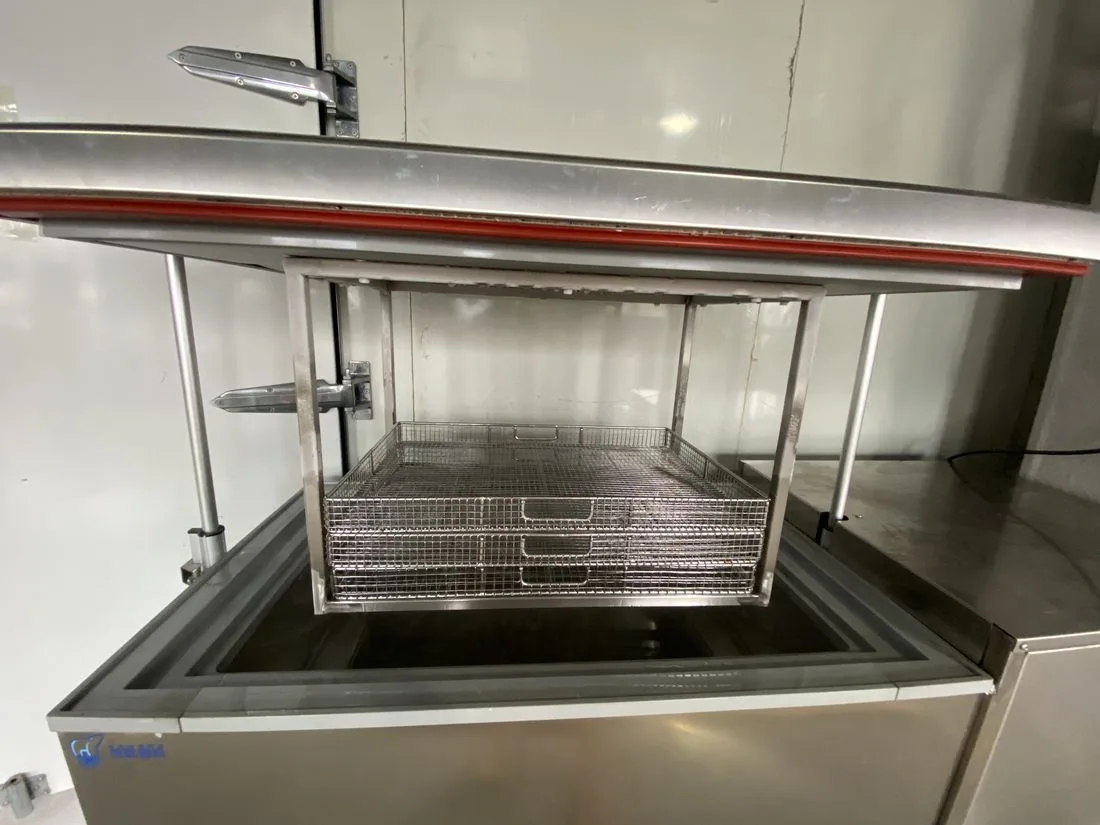
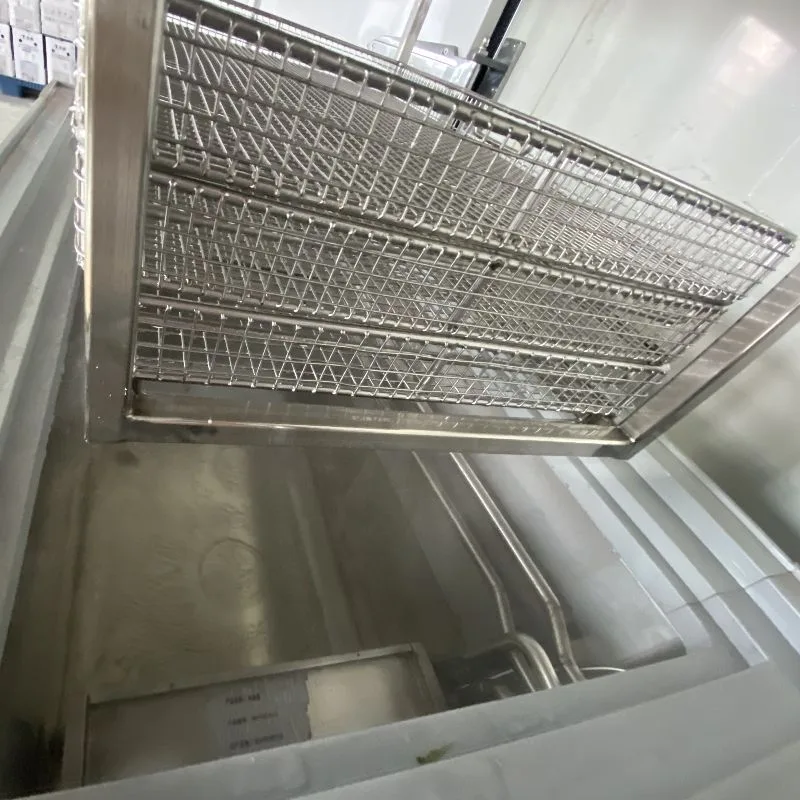
- The stainless steel mesh basket holds ingredients, the entire basket goes into and out of the groove, and the lifting of the boom reduces manual lifting.
- For rapid freezing and cooling of seafood, steak, meat and poultry
- Continuous operation design for commercial scenarios
Who
- Rapid freezing of seafood wholesale and processing enterprises
- Cooling process of steak and meat and poultry cutting processing line
- Pre-service quick freezing in central kitchens
- Food processing lines that need to shorten freezing time
Selection points
The choice of equipment for liquid freezing depends on three variables: the amount of single treatment, the shape of the ingredients (whole, slit, with packaging), and the length of treatment allowed per batch. Only after these three items are determined can the capacity and temperature zone configuration be determined.
Commercial Quick Freeze Protocol
First clarify the category and processing volume, and then determine the equipment.